
Supplying Grounds of Arrest on Separate Paper Invalid if Not Mentioned in Arrest Memo: Allahabad High Court
Supplying Grounds of Arrest on Separate Paper Invalid if Not Mentioned in Arrest Memo: Allahabad High Court
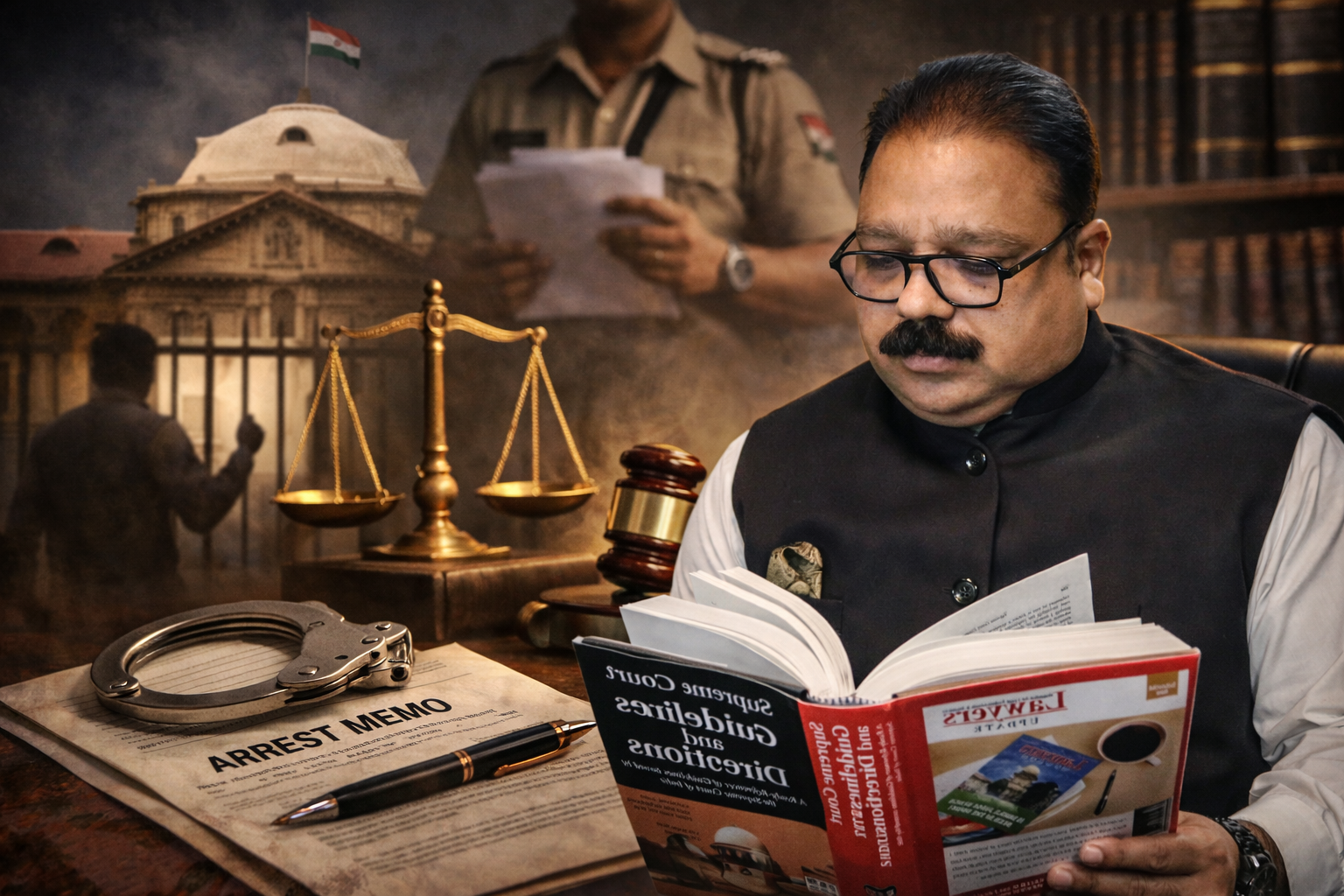
The Allahabad High Court has held that supplying the grounds of arrest on a separate sheet of paper is invalid if the same is not clearly mentioned or incorporated in the arrest memo. The Court emphasized that the requirement to communicate the grounds of arrest is not an empty formality but a fundamental constitutional protection.
The Court observed that the purpose of informing the accused of the grounds of arrest is to enable them to understand the basis of deprivation of liberty and to effectively exercise their legal remedies. If the arrest memo does not clearly record that written grounds were supplied, the safeguard becomes ineffective.
The judgment reinforces the mandate under Article 22 of the Constitution of India that every person arrested must be informed of the grounds of arrest. Procedural compliance must be meaningful and substantive, not mechanical.
Strong Views of Dr Anthony Raju, Advocate Supreme Court
Dr Anthony Raju, Advocate Supreme Court and Leading Expert in POCSO Cases, states:
The communication of grounds of arrest is a constitutional command, not a procedural ritual. In criminal prosecutions, especially sensitive matters such as POCSO cases, arrest must strictly comply with constitutional safeguards. Supplying grounds on loose sheets without proper incorporation in the arrest memo undermines transparency and violates Articles 21 and 22 of the Constitution. Any deviation from due process weakens the foundation of criminal justice and may render the arrest vulnerable to challenge.
This ruling strengthens the protection of personal liberty and reinforces the Rule of Law.
Strong Hashtags
#DrAnthonyRaju #SupremeCourtAdvocate #POCSOExpert #CriminalLaw #PersonalLiberty #Article21 #Article22 #RuleOfLaw #HumanRights #ConstitutionOfIndia